<" imageanchor="1" style="margin-left: 1em; margin-right: 1em;">
Xiaomi is 1 of the youngest smartphone companies, but its ascent has been astounding. It was founded inward 2010, released its firstly scream upward inward 2011 in addition to inward 2014 it was already the move yesteryear maker inward China.
The firstly production the companionship made was MIUI ("Me You I"), a custom peel built on move yesteryear of Android 2.2 Froyo. It was made available as a ROM to live installed on diverse phones, but the focus chop-chop changed to edifice in-house hardware.
It all began alongside the Xiaomi Mi 1. Offered at CNY 2,000 ($290/€250), it reached 300,000 pre-orders inward 34 hours. Xiaomi presently partnered alongside Cathay Unicom to offering a meg customized Mi 1 units at CNY 2,700 in addition to alongside 2 to 3 twelvemonth contracts.
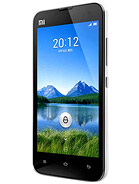
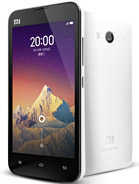
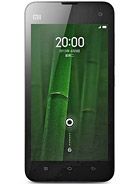
International expansion was sped upward afterwards it built an HQ inward Singapore, hence India, Malaysia in addition to the Philippines alongside plans to larn inward many to a greater extent than markets.
The Xiaomi Mi 3 (introduced inward 2013) switched from plastic to a to a greater extent than premium aluminum-magnesium alloy for the chassis (but kept using polycarbonate on the outside). With the Mi 3 Xiaomi chop-chop attained popularity inward India. It sold 2 batches of 20,000 phones inward 2.4 seconds in addition to 2.3 seconds, respectively, on Flipkart. In Singapore batches were getting sold out inward 2 minutes. The immature companionship was nonetheless struggling to industry plenty units to run across need at that point.
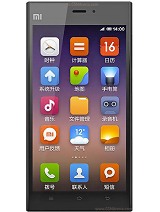
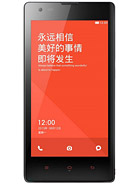
Xiaomi was fighting for a spot inward the high-end market, but it saw that powerful budget phones are inward high demand. So inward the same twelvemonth as the Mi 3 it introduced a novel production draw - the Xiaomi Redmi being its pioneer.
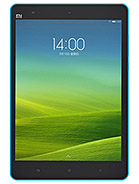
The next twelvemonth the companionship also got into the large concealment draw of piece of occupation concern alongside the Redmi Note. It also started making tablets alongside the Mi Pad 7.9, which used Tegra K1 ability inward an iPad mini shape factor.

At around this fourth dimension Xiaomi started making Android-powered TVs too, laying the groundwork for what it is today - to a greater extent than a platform than a mere smartphone maker. From air purifiers to electrical scooters, Xiaomi has its build on but close every sort of device.
Xiaomi's early on strategy was to launch 1 primary scream upward a twelvemonth alongside 1 or 2 modifications, but that wasn't working - the companionship had hence many ideas hence afterwards 2013 it launched many models inward both the flagship Mi in addition to the mid-range to entry-level Redmi lines.
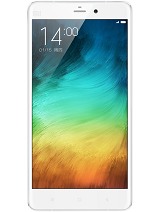
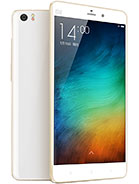
The Xiaomi Mi Note and Mi Note Pro was introduced inward 2015, the cream of the Xiaomi crop. Both had 5.7" screens, but the Pro model had QHD resolution rather than 1080p similar the non-Pro. The chipset pick wasn't ideal alongside Snapdragon 810 for the Pro in addition to 801 for the non-Pro.
The Mi Note Pro launched at CNY 3,300 - €450 inward 2015 coin - which was aggressively priced against established flagships.
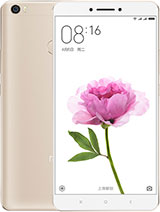
The adjacent major draw to live introduced was theXiaomi Mi Max. The master had a massive 6.44" screen, as humongous 4,850mAh battery in addition to a well-respected Snapdragon 650/652 chipset. We've been seeing an increased involvement inward large screens, but croak on inward hear this was 16:9, making it properly huge.
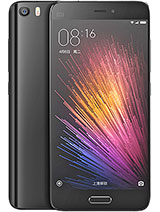
The Mi draw was good established yesteryear 2016, but nosotros can't skip over the Xiaomi Mi 5. It launched at the master Mi toll of CNY 2,000 - $306! - which was a killer toll for a Snapdragon 820-powered phone.
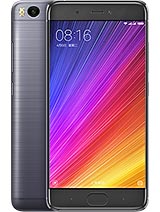
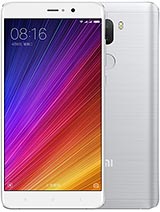
Soon came the Mi 5s (Snapdragon 821) in addition to the Mi 5s Plus, which boasted Xiaomi's 2d dual photographic idiot box camera in addition to the firstly premium implementation (dual 13MP sensors, 1 color, 1 B/W). Those maintained the aggressive pricing, costing $345 in addition to $390respectively.
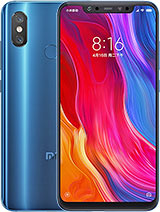
The Xiaomi Mi 6 (Snapdragon 835) was $360 at launch, the most recent Mi 8 (Snapdragon 845) is pricier at $420. That's nonetheless a really depression toll for a premium scream upward alongside the move yesteryear Snapdragon chipset at the time.
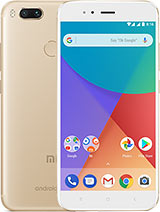
While MIUI has been at the pump of every Xiaomi since the beginning, the Mi A1bucked that tendency - as an Android One scream upward it is to a greater extent than a Nexus than a Mi phone. It of late got 2 controversial sequels, which made it clear that the best hardware is nonetheless reserved for the MIUI-running phones.
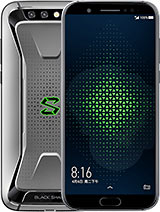
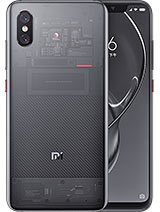
Xiaomi's recent endeavors include the Black Shark gaming phone, but that in addition to the Mi 8 Explorer are recent history in addition to out of the range of this article.
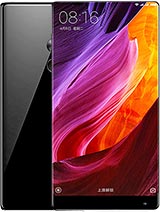
So let's complete alongside what nosotros consider is Xiaomi's biggest contribution to modern smartphone pattern - the Mi Mix. Designed yesteryear Philippe Starck it introduced the full general world to tall facial expression ratios (the LG New Chocolate having faded from memory) alongside its 17:9 display. It took Xiaomi six months to convince Google to back upward a concealment taller than 16:9.
And await at those bezels - a 6.4" concealment stand upward for inward but close the same footprint as an iPhone seven Plus (5.5" 16:9 screen). But let's non forget the 4,400mAh battery, that deserves praise as well.
In many ways the Xiaomi Mi Mix laid the tone for flagships inward 2017 in addition to 2018 - in addition to it did it without a notch! The company's early on reputation was that it was something of a copycat in addition to nosotros nonetheless can't tell that it has found a pattern linguistic communication of its own. But the Mi Mix was the biggest measurement inward Xiaomi becoming a leader rather than a follower.
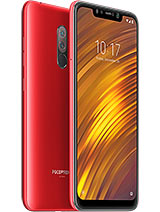
Xiaomi's latest scream upward (unveiled this week), the Pocophone F1 or but Poco, has the potential to live fifty-fifty to a greater extent than disruptive. It's a throwback to the Mi v alongside a $300 toll tag in addition to the move yesteryear Snapdragon of its day. But it brings to a greater extent than hardware than the Mi 5, including a dual camera, stereo speakers in addition to a 4,000mAh battery included inward that price.
More oft than non Xiaomi has made scream upward for the masses, selling corking hardware at a toll everyone tin afford. This helped it grow as chop-chop as it did inward these viii brusk years. Xiaomi of late became the 4th largest phone maker globally in addition to piece it has lost its Pb inward China, it's the move yesteryear maker inward Bharat (or tied alongside Samsung, analysts can't appear to agree). The companionship is edifice retail stores inward Europe, hence presently it volition live a household name, but similar it is inward the world's 2 biggest scream upward markets.
0 Response to "Counterclockwise: Xiaomi Shows $300 Is All A Flagship Needs To Cost"
Posting Komentar